Our CHD Story starts in 1997, on Tasha's 3rd birthday, when her younger sister Allison was born! Allison was born at 9:47 a.m. in Hot Springs, AR. Miraculously, they discovered she had a problem rather quickly, due to an x-ray taken of her clavicle, which was broken during the birth process. This x-ray also showed her heart, specifically, that there was something very wrong with the size and shape of her right ventricle. ( Alan, my husband, was almost thrown out of the nursery and delivery area, because he was telling the nurses something was wrong with her and they didn't believe him - but that's a long, detailed and ridiculous story for another time. I had to tell the nurses to shut-up and listen to him!) Then the x-ray tech walked into the nursery and said "you need to get a doctor in here for this!"
Allison was flown by Arkansas Childrens Hospital's Angel One helicoptor to ACH in Little Rock, AR. My doctor had told me that they would NOT release me from the hospital to go with her; I asked him how many security guards they had available. I WALKED into the main entrance of ACH at 12:17 p.m., just 2 hours and 30 minutes after she was born. She had her first OHS (open heart surgery) at 2 days old, and her second OHS at approximately 5 months old, which was an amazingly short time between the surgeries, for what she had. She had progressed so well. Her first surgery made an opening where her Pulmonary Valve should have been, and placed a shunt to the pulmonary artery, to route some blood directly to the lungs, and decrease pressure on the right ventricle(RV). Without the pulmomary valve, in utero, the right ventricle does not form properly, and is usually very small and underdeveloped in the pumping chamber, yet the tissues and muscle walls are usually increased in size (defined as Hypertrophy). Allison's RV was small enough to see a serious size difference in the x-ray, but it managed to grow quickly, almost miraculously, into a close-to-normal size. Her second surgery removed that shunt, to prevent too much blood flow to her lungs, and allowed her RV to do it's own job. But she still had just an opening where her Pulmonary valve should have been. At that time, 1997, general medical consensus said this was not hereditary and we should not worry about future children having issues. She spent a good amount of time in the hospital and came home on meds, had regular monitors and very frequent cardiology checkups for years... but ultimately, things had settled into NORMAL. Sure, if she got a fever, it was a cause for concern. All the normal concerns and warnings for CHD children were in place for her, but she was "an exception to the rule", according to her cardiologist. She rarely had any complications, no excessive illnesses, a few antibiotic shots and rounds here and there, but other than the "big, glaring CHD" issue, the induction into "the zipper club", she had no real health problems. The years rolled by, and ultimately, all was well and we were doing pretty good with our own little version of NORMAL.

So let's enter 2007 - We have had many good years and were doing really well when we found out we were going to have our little boy. 2007 was my "pregnancy year." Normal ultrasounds, we had several, and everything went well.
Late October 2007, just one week before Arley was born - our daughter, Allison, had a "regular" annual cardiology exam. The ECHO and stress tests showed "issues". She was to be scheduled for an MRI within the next month. At this same appointment, our regular cardiologist, who specializes in fetal echos, asked me if we had performed a fetal echo on this baby? I said, NO, we hadn't, but that no one had recommended one... should I have had one? Was there anything to worry about? She said we were now too late in the pregnancy to see one, but that it should have been recommended. SHe really wanted to reassure me it would be okay.
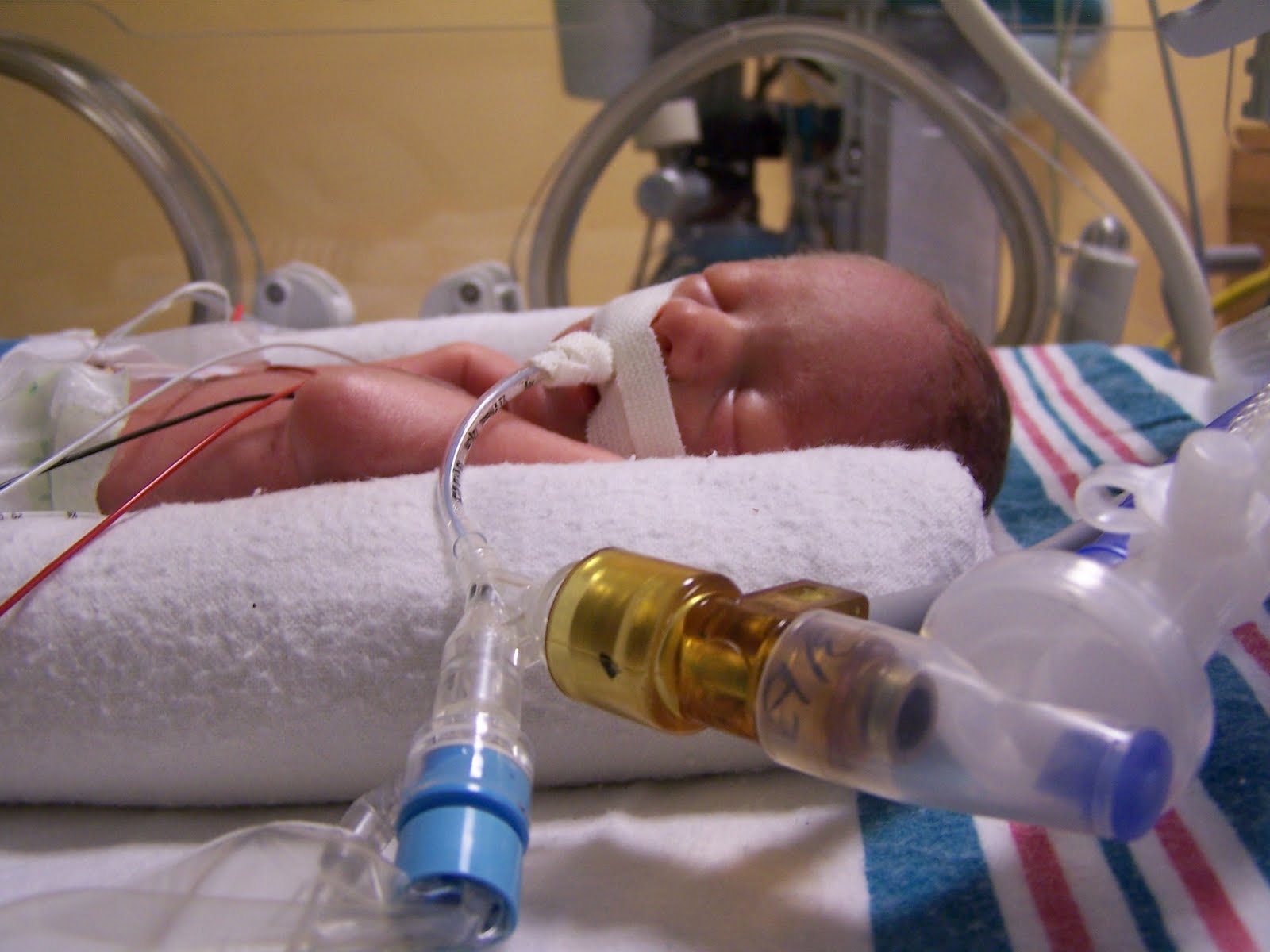
On Halloween, at 12 NOON, on the dot, little Arley came into this world, on his daddy's birthday. While my husband did have to make a little bit of a scene here too, it was rather quickly apparent to the nurses that there was some oxygen level problems with our son, and within a few hours of birth, Arley was sent by ambulance across town to ACH.
I, again, WALKED into the same Arkansas Children's Hospital entrance, just as I had 10 years before, at 4:14 p.m., just 4 hours and 14 minutes after Arley was born and being 10 year older and far wiser (ha!), immediately after I walked in, I was convinced that getting a wheelchair ride would be more sensible : )... so I rode to the NICU, where my baby was now waiting...
His diagnosis took a little longer than Allison's had 10 years before. I honestly think they were testing and retesting to make sure there was no mistake. After all, it really couldn't be correct. It was practically impossible that Arley would have the EXACT SAME HEART DEFECT as his older sister. But again, our diagnosis was Pulmonary Atresia with Intact Ventricular Septum! Let's talk DejaVu?? Really? You HAVE to be kidding me, right? ?
Within his first 4 days of life, he had undergone multiple tests and catheter procedures; unsuccessful catheter procedures. They got info and pressures and pictures, but could not "fix" any of the problems as they had hoped, so on Nov 6, 2007 he had his first OHS. For all the medical advances of the previous 10 years, his surgery was basically the same as his sister's in 1997. Didn't take quite as long, newer meds, newer tools, more confident surgeons, even, (not necessarily better surgeons, because we were blessed all around with great surgeons, just that these procedures were a little more common and tested by 2007 than they had been in 1997) but still, pretty much the same procedure. Enter a long hospital stay, one suspected stomach bacteria that turned out to be a reaction to the formula they were adding to my pumped breast milk and tubing into him, tedious issues with teaching a baby to suck on a bottle after they've been sedated for too long, etc.

In Dec 2007, Allison finally had that MRI she was previously scheduled for- remember? the one we had postponed during Arley's critical stages - and YES, guess what? She needed her 3rd surgery, a valve implant, and soon; docs said I needed to schedule it before summer, at the latest. Her heart was having problems, it would be okay for a little while, but whatever time we delayed would continue to cause further damage to her heart. Damage that it might or might not be able to "recover" from... Needless to say, we adjusted our calendars and got her on the schedule for March, 2008.
In Feb 2007, Arley had a balloon angioplasty, due to post-operative stenosis in his branch pulmonary arteries. Short hospital stay, bad reaction to the anesthesia, but he came home and recovered well.
In March 2008, Allison had her 3rd OHS (she was 10) to put in a prosthetic pulmonary valve. The valve she has is also a newer development, at least it was NEW in 2008, and although it was placed during an OHS, the internal parts that wear out and and require replacement can be removed and replaced by a catheter procedure, if all goes smoothly.
It is quite different to have an older child, who can talk and communicate and tell you "what for", go through an OHS, than it is to have an infant go through OHS. One is tiny and you can't hold them, and they can't tell you what they feel. The other is still your "tiny baby", just grown a little, and in a bigger bed: but you still can't hold them, and they ARE verbal enough to understand AND to be able to tell you what they feel.
I can honestly say it doesn't get easier just because we've done it several times before! We may be "old hat" at the processes, but the emotions never get dulled. If anything, I find each surgery and procedure is harder than the time before. It definitely takes a toll - on the patient, on the family!
In June, 2008, Arley had another balloon angioplasty.
In August 2008, he had his second OHS, closing down his shunt. The surgeon also used this opportunity to place some patches on his Branch Pulmonary Arteries, these are small sections of tissue added to the arteries in an attempt to expand them and allow them to grow further on their own, little "expanders", sort of. He has more severe right ventricle hypertrophy than Allison did, and he has the branch pulmonary artery stenosis. His progress is not going to be as steady and easy as Allison's was. He'll have to clear his own path and write his own story.
Since the last OHS surgery in 2008, Arley has multiple catheter procedures, Echo's, EKG's, some just diagnostic, some balloon angioplasty, cutting balloon angioplasty, as his doctors are determined to prolong his growth time before his next OHS. We've had a weekend stay for a still unexplained spiking fever, which rated not only multiple IV's and blood draws, but also rated a spinal tap. They don't sedate feverish "heart" children for spinal taps. That's not an experience I recommend for anyone. The post-operative stenosis of his branch pulmonary arteries is a persistent problem, and the one that we believe will ultimately create the need for most of his future procedures. And that's not even approaching the subject that he currently has only some partially functioning "flaps" where his Pulmonary Valve should be. Nor is that discussing his right ventricular hypertrophy. Nor any weakness of his lungs caused by prior low blood flow... nor... anything else...
His most recent procedure was in November 2010, when he was admitted for a cutting balloon angioplasty. They did perform the angioplasty as planned, but the internal findings were severe enough that they also placed a stent in the lower branch of his Right Pulmonary Artery. Thanks to recent medical advancements, the stent that was used is expandable, via catheter procedures, which means that rather than requiring an open chest procedure to replace this stent as he grows, the stent can most-likely be expanded by catheter procedures to grow with him.
We know that Arley will definitely have future balloon angioplasty procedures, on both his Left Pulmonary Artery (which they left alone during this last procedure) and on his Right Pulmonary Artery again. The secondary branch to the upper lobe of his right lung is still exceptionally small at one point, and of course, there will eventually be the expansion of the stent that will be necessary as he grows. The stent is placed in a section of the RPA, towards the lower lobe of the lung, just past the branch to the upper lobe. After this last procedure, the increased blood flow to his right lung was more than his body was prepared to handle, and he had problems maintaining his pulse oxygen levels, the level of oxygen in the blood. His lungs were not capable of pulling the oxygen from the air and putting it into his blood. This was a very scary development. The doctors called this pulmonary reperfusion. It also places him at even greater risk, should he develop any kind of lung infection. However, he now seems to be stabilized and returning to "normal". That's his normal, our normal, not your standard definition of NORMAL.
Arley suffers from night terrors and nightmares, he has woken up screaming "NO, Doctors HURT Arley". He has woken up just SCREAMING, not stopping. When he first slept through the night, I would wake up suddenly, heart pounding, lump in my throat and roll over, or run to his bed, just to touch him, and know he was okay. ( I did that same thing years before with Allison, but I think shock had dimmed my memories of that, until the "DejaVu" experience of Arley's birth and surgery brought it all back.)
Allison was an outgoing, wonderful child before this last surgery. She was extremely intelligent, hard-working, eager to please. She still is. She's just not her old normal self anymore. I guess this is her new Normal...
They say that there are always risks of some damage from the bypass machines - limited oxygen, the cold, the sedation. She's not "damaged", not by any medical standards. She's still just as beautiful, and still smart; but she's changed. And she's old enough, and smart enough, to know that there's a little difference, just a little one, but it's there. I feel self-concious even writing this, almost like I'm betraying her, or being unfair, but I know that she knows there's a slight difference, and we've talked some about it, so it's only fair to be truthful here, and say that there ARE differences.
Allison cries now when we talk about Arley needing another surgery. She knows what it means for him.
She knows she will have future procedures, as well, but she doesn't cry for herself; Just for him.
And then there's Tasha, the most awesome big sister ever. Sure, those surgeries were physically and emotionally traumatic on my two littler ones, but it's so easy for us to forget that it has had it's effects on our older daughter as well. Maybe those scars are unseen, but they are there.
I've so enjoyed FaceBook and the CHD community that it has brought into my life. I never had anyone to really talk to when Allison was little about living with CHD and what it does in a family. Your average people, the day to day people in your life, love you, certainly, but they have no concept of what CHD really does to you. It's easy to say, oh, they were born with a problem, but they've had surgeries and it's fixed now. My children will never be fixed. They will always have some issues, some tests, future valve replacements, future Angioplasty, further damages, etc; all of these are complications of PA-IVS, which is a form of HRHS (Hypoplastic Right Heart Syndrome), of which Congestive Heart Failure is a "concurrent diagnosis". What does this actually mean, non-CHD "people" ask? It means my precious little children have a problem that isn't "curable". It can be treated, and the heart can be made to work in other ways, but it can't be cured. It means our "NORMAL" IS NEVER NORMAL!
But you know what?
My hope is to live life to the fullest and make every moment count, and to help my children do the same. We are refocusing our life to help them understand that while money is important for comfort and survival in this world, it is not the answer to all problems. While there are moments that fear is very harsh and I get so scared I can't breath, I remind myself that "Who of you by worrying can add a single hour to his life?"- or to anyone else's? I want to enjoy the time that I have with my children and my family. And I believe that theirs will be a long and happy life. I HAVE to believe!
I beleive that I will someday have grandchildren. Grandchildren who may be at extreme risk for CHD. Without CHD research and further genetic research, there's not an answer as to why I have 2 children with an identical condition. There's no knowledge as to whether Tasha could be a carrier of some unknown gene, there's no knowledge of what the chances are that Allison and Arley will pass this on to their children. There's the question of whether Allison's heart could survive pregnancy and childbirth. There's so many questions that need answers. To get answers, we must have research!
I support CHD Awareness so that, possibly, future CHD parents and children won't have to face all the extensive procedures that I have seen. So that, as each new doctor has an idea for a way to do a procedure through a catheter, rather than having to open a tiny child's chest, there's funding available to test and improve and implement that idea. So that, all those tiny, ridiculous, unusual, yet deadly, little complications - that can take a precious child's life in a heartbeat <3, can be studied, can be controlled, can be shared between professionals in the field, so that one hospital, one doctor, who has discovered a way to decrease the incident of those complications, will have a way to quickly, easily and openly share that information. If a new development can save the life of just ONE LITTLE BABY, one child who beats the odds and continues on to share another day with their family, then that will be success. That development will mean the world to that child, and to that child's family, and to that child's friends, and to that child's future. That child WILL HAVE a future. I've seen so many children lost, so many angels earn their wings; and it's so hard to know that one little bit of research, one more bit of shared knowledge, MIGHT have prevented that.
Ignorance is no excuse! Share the cause, share the info, share your stories.
Because: Awareness = Funding = Research = Answers = One more day for a CHD Warrior